Gabon seemed to me the most exciting African country to visit after having been
to Kenya, Uganda, Tanzania, Malawi, The Gambia, Senegal, Ivory Coast, Cameroon
and South Africa. It has two of the most impressive African Bee-eaters and it
is the place I hoped to see the Red-headed Picathartes.
Before I started looking to details, I also thought this to be the country to
see both African Pitta species as it seemed the most fitting looking at
distribution maps. To my surprise no report mentions seeing these birds.
Apparently they are very difficult and one does not know good breeding sites.
Also I was a little surprised to read that all trips by the major tour-companies
and probably half of the independent travellers misses the Picathartes.
So this seemed by no means a sure thing.....
My personal targets for this trip were the Picathartes,
Rosy and Black-headed Bee-eaters, White-bellied Kingfisher (one of the last of
the African Kingfishers I needed) and Bare Cheeked Trogon. Priorities were a
little different with my companion George Wagner. He had not been to Cameroon
but had been to Ghana and had seen the Rosy Bee-eater
During this trip due to difficulties with our timing we reset these
targets to replace the Rosy Bee-eater (which is easy in Ghana) by the endemics
of Sao Tome and Principe. Having missed the Picathartes
and Trogon in Cameroon and realising the Black-headed bee-eater is the most elusive
of the two Bee-eaters, with no known sites outside of Gabon. It seemed that
the Black-headed was the most important. I
also missed White Bellied Kingfisher in Ivory Coast and Cameroon as well as
Bare Cheeked Trogon in Cameroon. As others we also had no records of the
Pitta's so my list of African countries to visit in the future seems have to grown
a little after this experience.
Our timing to go to Gabon was in hindsight most unfortunate. Just three
days before we went, the country almost headed towards a civil war. There were
elections and these were probably rigged by the sitting president Ali Bongo.
Most local people did not accept the results that pointed Bongo as a winner by
a fraction of a percentage because he lost in all provinces but his own and in
his province was supposed to have won by a landslide of nearly all the theoretically possible
votes. This outlined the worst possible conditions to travel to an African
country at that particular time. We arrived when the state of emergency was
called on the nation and there was no internet, curfew, all banks closed and
restricted travelling. Just one day before we arrived there were serious riots
with deaths and the parliament building was set on fire and the army bombed the
opposition building. Most people would probably have aborted their plans to go
through with a trip in such uncertainties. However we both are quite
experienced travellers and managed with some trouble to reach all but one of
our destinations and I personally saw my most important birds. It appeared that
the army held firm grip on the people and most of the remains of the riots
were already cleaned up (there were marks of many tyre-burnings). We did not
manage to arrange our trip to Loango NP because of
this trouble and this lead to rearrange our schedule to have more time for the
endemics of Sao Tome and Principe instead. We initially intended to include
these Islands but now we had a little more time at some sites and enough to
make sure these Islands were also done properly.
I was happy with the result. Managing to see the birds that would not
make it necessary to return to this country that is reputedly the second most
difficult country to get a visa for and also one of the most expensive in
Africa. Also we managed to see all but one of the critically endangered species
on the islands. The one we missed was the Principe White-eye and we dipped the Principe
subspecies of the Thrush which required even more time than we had. The latter is not split by
all taxonomists but probably will be in the future.
Especially missing out on Loango NP was most
regrettable. I would certainly stress to include it in your trip if you go. It
is one of the most impressive wetlands of the world and holds a list of mouth-watering
species that makes it arguably the most important site of Gabon.
Ideally I would adapt the itinerary of this trip to shorten the visit to
Lekoni, Ipassa and Sao Tome
and Principe by a few days to have at least 4 days in Loango
NP. This was also what we planned but fate decided against us.
Contact information is marked red
Pre-departure Planning
With so few reports of independent birders and mostly old information
this seemed like one of those trips to travel the old-fashioned
way: just go and see where one ends up.
With the internet down just before we could travel we had just one indication
that someone was expecting us. Well ahead of going we were not able to contact
people for Ipassa and had sent a few dozen of e-mails
with no response or bounces. We did however get two responses of which one
turned out very valuable. The guide Ghislain Ngonga for the Mikongo area in
Lopé NP turned out reliable and very helpful to get us to the right trails and
without him we would have had no chance of seeing the Picathartes.
ndjibadi@gmail.com
With the Loango Lodge recently closed (which
used to be the place were birders used to go) new possibilities are sought. We
tried the cheaper and “next door” Gavilo
lodge. After some e-mails We got in contact with the owner who is a Doctor. He
at first told us because of the unrest in the country he was not sure he would
be able to receive us. These lodges need to be prepared for visitors 15 days in
advance. Fuel, food, people everything needs to be transported from Libreville.
With tourism practically limited to the few tourcompanies
it seems that there is not enough demand to keep a lodge going. The connection
to get there is: Local flight from Libreville to Port Gentil
(twice a day), long boat ride from Port Gentil to Omboué, followed by 4WD transport to the lodge. This makes
it also a very expensive place to visit. Count on at least 90.000 CFA per person per
day, excluding boatrides (these could be up to
200.000 to get to the best birding site) and 4WD transfer (100.000 going and
returning to the lodge from Omboué). From the lodge
most trips are done by boat and some of the best places are still hours from
the lodge so are very pricey. If you want to try this here are the contact
details:
cliniquesosmedecinslbv@yahoo.fr
DOCTEUR FRANÇOIS NDELIA SOS MEDECINS ET PROPRIETAIRE DE GAVILO
TEL: +241 07 40 40 80 / 06 25 08 88
BP :436 LIBREVILLE - GABON
When we were close to going there we received a message that despite the
settling down of the unrest he was still not able to receive us. Around that
time there were still restrictions as we found out when we were stopped by the
police going to Lekoni. That may have been because the
village of the president is located along that road. I believe however that
the Gavilo Lodge is still a good option to try if you go there.
After we got back from this trip we found out that Rockjumper
had decided to try another alternative to visit the right habitat around Loango and went to Lambarene then
hired a large boat to near-by Tsam Tsam Lodge on Lake Oguemoue for
two nights. From there they went by boat to Omboué
for one night and one morning to the Mphive channel.
Then back by boat to Port Gentil and flight back to
Libreville.
For Ipassa we had no idea at all if we were
able to get there. We were fortunate that Ghislain
provided us with a phone number and name of someone to contact: Carine: +241 04 05 43 12 We called once we were in Makokou and to our pleasant surprise Carine was able to
arrange everything for the next morning for by Gabon standards good value for
money. Since we were not able to go to Loango we
already stayed a day longer at Lekoni and now stayed
also longer at Ipassa and had more time for the
Islands. Ipassa has a huge capacity so it is probably
not necessary to phone beforehand but with so little tourism in this country it
might not be a bad idea to contact Carine before you go.
A good preparation goes together with the largest collection of birdsounds that you can find. Thanks to a wonderful and
long awaited iniative one can now find a fast growing
database of sounds to be downloaded at:
http://www.xeno-canto.org/asia/browse.php
For this part of the world the Macaulay library is also very useful:
http://macaulaylibrary.org/search.do
There are some tools on the internet that will allow you to grab the
sound file straight from the soundcard of your PC. The best free tool for this
is: “Audacity” If you have copied the Lame dll to the
right directory you will be able to create mp3 files. As soon as you press play
on the website you can convert it straight back into an mp3-file pressing the
recording button right after the announcement to get pure soundrecordings
which you can also polish, filter, amplify etc. Cooledit
does a similar job.
For more information to plan your itinerary have a look at:
https://www.cloudbirders.com/tripreport
The book: Birds of West Africa; Nik Borrow & Ron
https://weather-and-climate.com/average-monthly-Rainfall-Temperature-Sunshine-in-Gabon
The best time to go there is supposed to be from late September onwards
for chances to see the African River Martin. However monthly rainfall figures
rapidly go up from this month from less than a 100 mm a month to more than 350
mm a month so you should make up your mind for this dilemma. We did not see the
Martin at Ipassa and were not able to get to Loango so we missed this enigmatic bird. We argued a little
before we left about the best time. We were not sure about the chances for the Picathartes. Probably September is not the best time to see
it. Little is known about the bird but suspected is that it stays around the
breeding sites throughout the year. To me it is still a huge mystery why none
of the tour-companies make any mention of this bird. To me personally it is
definitely in the top 10 of all African (if not the world!) birds to see. It is
stunningly beautiful, colourful and elegant with a shape and markings that make
it look like it is not from this world, it is one of the most enigmatic of all
birds together with its only relative of the upper Guinea area. It is very
secretive and shy which makes it challenging, it is relatively big and its
habits are unique and mysterious. It is quite simply one of a handful
exceptions in the bird world that has all the merits to make it one of the most
wanted to see. Maybe these tour-companies want to keep this bird as a
speciality for their Cameroon trips. The other reason might be that the
honeybees which are a nuisance are considered to be too much of a problem to
guide groups to the place. Since I missed the bird in Cameroon (lack of
knowledge when and where to see the bird quite a long time ago) this trip for
me was all about the Picathartes. Seeing it was
immensely thrilling and delightful.
We had the best possible weather at all places (clouded but dry) except
for Mt. Carmo (heavy rain most of the time) on Sao
Tome and half of the time on Principe.
Visa
It is tedious and there are no certainties you will get a visa for Gabon. There
is an internet service set up but unfortunately this service does not have the
facilities build in to meet the requirements. The service allows you to upload
two items: passport photo and passport data page. But the requirements include
a proof of booking with details where you will stay. Their helpdesk usually
replies by e-mail that your request is denied because you did not include the
proof of booking. In my case they told me to reapply. Reapplying seems of no
use because it will be denied stating that there is already an application with
the same details. I started off trying for a multiple entry but after two
denials tried for a single entry and finally after a few e-mails where I
replied attaching a PDF from a single night booking at Booking.com in french (Booking.com gives you the opportunity to print it
in french) for Libreville I got my Visa-approval
form. George trying this in the US was not so lucky trying to get a multiple
entry visa. He had to make use of a Visa service in Washington DC and had to
pay a lot more but received multiple entry visa for 5 years.
The easiest way to get your proof of booking is to book at Booking.com.
We would have liked to stay at the first nights at the Tropicana but unfortunately we could not get
an e-mail address to contact them. We settled for the Hibiscus Hotel at
Boulevard the Triomphal for one night (65 euro for a
room with a double bed) which seemed the only fairly cheap hotel bookable at
Booking.com.
Getting a single entry visa means trouble if you intend to go to Sao
Tome and return to Libreville. Custom officials are notorious for being unreliable
or unreasonable at many African borders. Not having a Visa or a Visa-approval
form means serious trouble. There are recent examples of people who went with
tour-companies but still were put on a plane back home. I knew I was in trouble
since I had to get back from Sao Tome on a single entry visa. I planned the
return on the same day as I had to fly back to Holland and luckily they let me
through after a little bit of a hassle. They confiscated my passport until
check-in time for my flight back home but the officials were actually friendly
and helpful and gave my passport back when it was time to check in. There was a
complication with my knife since one has to take the luggage to check in
through the security zone. They confiscated my knife and gave it back when a
police officer guided me with my luggage and passport to the check-in. The
police officer put me in front of the queue, ordered the airline to check me in and guided me back to the
passport check commanding the officer to let me through back to the gates. The
major problem seems to be that certain officers do not know how to deal with
this problem and indeed it seems a hassle for themselves.
Communication
Our problems with organising this trip started when we found out that
Mistral Voyages which independent birders have used as a ground agent in the
past, had closed their office in Libreville. Their head-office in france told me this after the bounces by e-mail. We were
not able to contact Patrice Christy which certainly will make your trip much more successful.
This would also reduce language problems. Mistral Voyages used to be the way to
contact Patrice Christy.
This meant that we had to do all the hard work ourselves without knowing
anything beyond the rough location of the major birding destinations. This also complicated the
travelling a bit since our skills in french are
limited.
Communication is only in french. So be
prepared. It would be hard for an independent birder to travel there if one
does not speak french unless you get a guide like
Patrice.
Bring a mobile phone as it is useful to contact local people when there
is no help from local people that are willing to call. In some places the
reception is bad and there is no single provider that is useful for all of
Gabon so ask locals if you are buying a local SIM card.
Tent
Necessary for Sao Tome. It could be useful in the Mikongo
area if you do not carry a musquito net and or are
allowed to camp near the very site for the Picathartes.
We did not ask because managed to see the bird quite easily at the second
nesting site we were brought to that is one and an hour brisk walking from the
station of Mikongo.
Mosquito net
Useful but not essential when sleeping at Mikongo.
There are huts but no beds. I decided to use my net but pitching up a tent in
the huts is also a possibility.
Sleeping bag:
Useful while sleeping in the tent at Sao Tome and Mikongo.
At Lekoni and Ipassa there
are comfortable beds.
Insect repellent
Useful for most sites and it seems essential for Ipassa
since it keeps the horseflies away. 50% DEET does the trick but it did not seem
to help enough against the bees at Mikongo. There is
some kind of chigger and also a small fly that bites that it seems to work
against.
Mosquito Head-net
It could be useful to use this at Mikongo. The
most troubling are the honeybees that will crawl into every gap and hole they
can find to lick the salt of your skin. They have reported to be a serious
problem to see the Picathartes which requires
patience and sitting down for some time. I brought it but did not use it.
George, who went a day after I did, to the best site told me that the
masses of bees where overpowering not allowing him to stay a minute longer
after he saw the bird. He used his net but found 9 bees inside his head-net, and was stung many times.
The bees could be the other reason why tour-companies are not going for
the Picathartes so be warned. It requires some
determination and flexibility of mind to not be distracted by the bees all the
time.
Bring something to bind your trousers and sleeves from preventing bees
to crawl inside. I again brought this and did not use it. Once at a site to
have chances to see the Picathartes I was too excited
to prepare for anything. But I had several bees in my pants and managed to get
them out miraculously without being stung. I doubt if you will be as lucky as I
am so be prepared to being stung and one should not take the risk to go there
if you are allergic to bee venom.
Anti-malarials
I brought Malarone and used it mostly for Mikongo and Ipassa. At the time we were there, the rains had not started and Mosquito's
did not seem a major problem.
Visa Credit Card
Getting cash money seemed a problem. Visa seems the most important card to
take. I did not manage with my Mastercard/Cirrus but
there should be possibilities to use it so I would bring it.
There seemed to be a problem with certain American Visa Cards.....George
comments.
Mobile Phone
Useful. Most phone services are mobile so especially if you speak french it is very useful to call the local people.
Navigational app Sygic (paid version) seems to do a
better job than the free Mapfactor app that I usually
use. We travelled by public means so did not really need it. This time I did
not buy a local SIM to be able to call because with my limited french I prefer to take time to deliver the message to a
local and have them to call. But not all locals do call with their own phones
and may ask you to pay for phone-credit.
Money
We anticipated some problems due to the state of emergency when we
arrived. We however expected we could change money at the airport. This was
possible but only by a local walking around with wads of money. At the time we
did not know how the notes should look like, what the rate was and if we were
ripped off or not, so we changed only little. We were surprised we could not
change cash US dollars at banks. Most banks do also not have ATM's other than
the Visa kind.
It is best to bring a lot of cash in Euro and a Visa credit card that
is issued in Europe. I brought a lot of cash in Euro but George's dollars seemed to
be useless until we got to Sao Tome and unfortunately his Visa credit card
seemed to be almost useless as well so we had to revert to cash in Euro several
times when paying for our stays in advance. All of our stays in Gabon we payed in advance and found the people we needed to deal
with (Gislain for Mikongo,
Carine for Ipassa, Antonio for Sao Tome) trustworthy.
In Sao Tome we payed half in advance and half afterwards in 3 different
currencies to get rid of our last local money.
Gabon is a very expensive country to visit. At our time of going there
the rate was 609,80 Euro to get 400.000 CFA out of a Visa ATM machine. I am not
sure if that is the limit but it is the highest amount that I got with the
single transaction fee.
We spend a little over 3000 Euro each and my flight
was 865 Euro travelling by Turkish Airlines which was the only airline that
sold budget tickets. The flight-times were quite bad
with a long stop-over in Istanbul. If you go independent do not expect to get
your budget below this and you probably have to add more than 1000 Euro if you
would go to Loango for just 3 days but it seems worth it if you have
the time.
Itinerary
|
3-9-2016
|
Amsterdam-
Istanbul- Kinshasa-Libreville
|
Travelday
|
|
4-9-2016
|
Libreville
|
Stuck in Libreville due to closed banks and adapted
train schedule. Trains leaving in the morning instead of evening (probably
due to curfew)
|
|
5-9-2016
|
Libreville -
Lopé
|
Train left hours late, went very slowly arriving at
dusk
|
|
6-9-2016
|
Lopé village
- Mikongo
|
Transport by 4WD arranged by Gislain;
Immediately tried for the Picathartes at first nest-site.
|
|
7-9-2016
|
Mikongo
|
Second
nestsite Picathartes
|
|
8-9-2016
|
Mikongo - Lopé
|
Birding along road. George to Picathartes
|
|
9-9-2016
|
Train: Lopé – Franceville;
taxi: Franceville - Lekoni
|
Travelday
|
|
10-9-2016
|
Lekoni
|
Full day at Lekoni
|
|
11-9-2016
|
Lekoni
|
Full day at Lekoni
|
|
12-9-2016
|
Lekoni; Lekoni-
Franceville
|
Morning at Lekoni.
Afternoon transfer to Franceville with stop at site
Black-headed Bee-eater and stop at bridge near Franceville
|
|
13-9-2016
|
Franceville - Makokou
|
Chose to travel by road instead of Train and 4WD
|
|
14-9-2016
|
Ipassa
|
In morning to Ipassa
station, birding main track
|
|
15-8-2008
|
Ipassa
|
Birding main track; afternoon boat ride
|
|
16-8-2008
|
Ipassa
|
Morning boat ride; afternoon main track
|
|
17-8-2008
|
Ipassa
|
Whole day
in forest
|
|
18-8-2008
|
Ipassa; Ipassa
- Makokou
|
Early morning birding main road and back to Makokou
|
|
19-9-2016
|
Makokou - Libreville
|
Travellingday by
bus
|
|
20-9-2016
|
Libreville
|
Staying at Tropicana arranging tickets
|
|
21-9-2016
|
Libreville –
Sao Tome
|
Flying to Sao Tome. Contacting Antonio. Staying at ...?
|
|
22-9-2016
|
Lago Amelia
|
Taxi to end of the road (Bom Sucesso), climbing to Lago Amelia
|
|
23-9-2016
|
Lago Amelia
|
Full day Lago Amelia
|
|
24-9-2016
|
Sao Tome - Principe
|
Flight to Principe, walking around San Antonio
|
|
25-9-2016
|
Rd. to
Joachim
|
Walking road/track to Joachim and back
|
|
26-9-2016
|
Principe –
Sao Tome
|
Flight back to Sao Tome
|
|
27-9-2016
|
Mt. Carmo
|
Taxi to Palm plantation – tracking to forest-edge.
Heavy rain, staying at ruins of plantation house
|
|
28-9-2016
|
Mt. Carmo
|
Full day at Mt. Carmo
heavy rain
|
|
29-9-2016
|
Mt. Carmo – Sao Tome
|
Morning Mt. Carmo
afternoon track back to river, taxi to sites for Sao Tome Kingfisher then
back to Sao Tome town, staying at house of Antonio
|
|
30-9-2016
|
Sao Tome – Libreville – Istanbul
|
Flight back to Libreville and flying back home
|
|
1-10-2016
|
Istanbul -
Amsterdam
|
8 hour stop in Istanbul too nagged to go to Bosporus
|
Detailed Site information and birds (names follow Clements):
Some birds were not confirmed by both of us, mainly because we
split up or because a bird disappeared before both could confirm it. Those
are marked with asterisks. MB=Michiel de Boer; GW=George Wagner.
Lopé village:
Some birds around the Annex hotel:
White-throated Greenbul, Swamp Palm Greenbul, Petit's Sawwing, Long-legged Pipit, Black-faced Canary,
Woodland Kingfisher, African Pied Hornbill, Orange Cheeked Waxbill,
Snowy-crowned Robinchat, White-chinned Prinia, Tawny Flanked Prinia,
Mosque Swallow, Common Bulbul, African Thrush, Blue-headed Coucal,
Red-eyed Dove, Pin-tailed Wydah, White-headed
Lapwing, Water Thicknee (at night), Turnstone (weird
to see this bird in the middle of the village).
When we left we had Bates Swift at the train station.
Mikongo
We were able to contact Ghislain Ngonga by e-mail well before we were going: ndjibadi@gmail.com
l'Association des Eco-guides MIKONGO'VISION
Parc National de la Lopé, GABON
Tél : (00 241) 06 79 57 69 /
(00 241) 07 74 03 97.
I received a call two days in advance from Ghislain
from a different number: +241 02 81 55 89 so if
you can not contact him on his official numbers try
that one.
The first trail at the top of the map is actually the train as I put my
GPS to see if we were close to the station we had to get out. The trail down is
the 4WD track to the Mikongo camp.
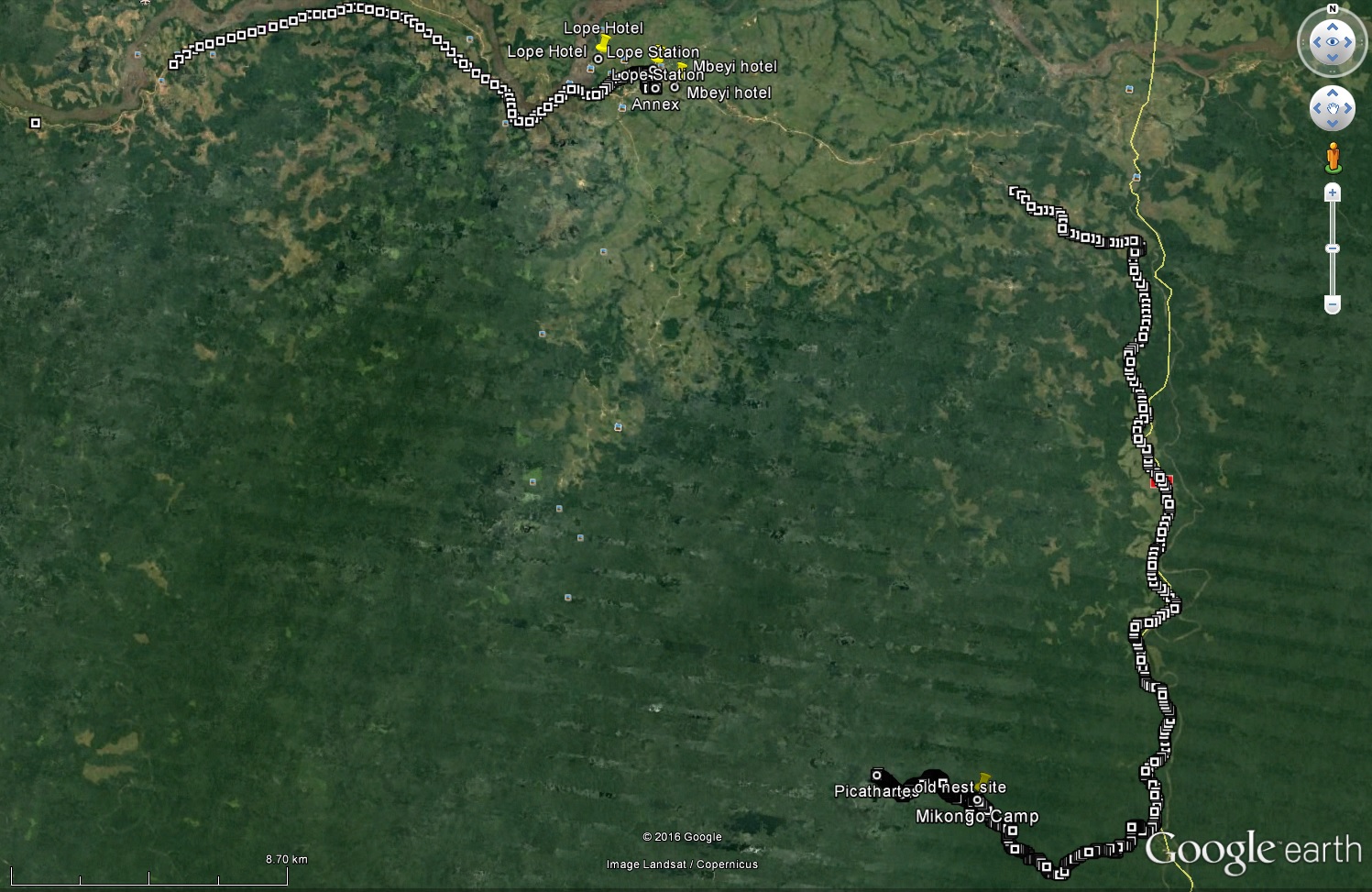
He quoted us a price of 235.000 CFA for 2 nights and 2 days for one person. He
reduced this to 215.000 CFA after some bargaining. The price includes: guide (Ghislain himself and an assistant), park fee, accommodation
(huts without beds), food and transport by 4WD to the camp and back.
Ghislain led us as
requested after we had lunch to the site for the Picathartes.
Soon after we left camp we heard noises of Mandrill. Ghislain
asked us if we wanted to see them. Of course we would! I missed this most
amazing, rare and restricted of the large primates in Cameroon where I only heard
it and saw traces of its existence. Soon after we had excellent views of an
enormous large group. We estimated them to be hundred or so!! We saw at least 6
full grown males that were very colourful and that all could have been alpha's. But an seemingly endless
parade of young ones, females with carrying their baby’s
were crossing logs to pass a stream. It kept on going and going. Lopé NP I
later read is known have the largest groups of this threatened primate. But we
never knew how large these groups can be.
After 2 hours of hiking we arrived at rocks we climbed up and he told us
to sit down in between the rocks with no possible view of the ground below.
Both of us realised our chances were almost not existing, sitting down where we were supposed to
sit. Further out with better view would scare the bird according to Ghislain but from where we were sitting I felt we had no
chance. I did not put my GPS on for the first site so it is not shown on the
map. Ghislain told us this was the way to see the
bird, so we tried with no success. Since I knew there were other nest-sites I
asked Ghislain to bring me to another site the next
morning. He told me it was a longer hike but that appeared not so. After
passing by an old nest-site the next morning (old nest-site on the map) we soon got into a very nice spot with
good view on the rocks and immediately I felt this was a much better place to
have chances so my adrenaline started rushing.

Only seconds after that we already saw a bird hopping over the rocks getting out of view.
But it provided a brief good view when it stopped looking back at us. I was as
thrilled as never before! After 10 minutes motionless waiting the
bird appeared again in view for 5 minutes and allowed me to study it in detail.
Amazing! What a bird! The head looks like it is designed by a futuristic
artist. With all these uncertainties before we went I felt I made the right
decision to go through with this trip. This alone was already worth the whole trip for
me. When I came back to camp obviously George was not amused as he decided he
would take his chances birding around camp. He made up his mind and insisted
that next early morning before breakfast he would go for the bird even though
we had to leave that day. Ghislain was not happy to
do this so we had to insist. Again George also managed to see the bird. On
their way back to camp they surprised a small group of Lowland Gorillas! The
silverback came out of a tree as fast as nearly a free fall and fiercely
shouting a warning.
When we left camp our vehicle stopped at the gate and I saw what George
meant. We saw 4 Gorilla's. Three young ones and an adult female. The female was
also in a tree and dropped down as fast as a free fall also fiercely shouting. It was a
highly impressive and memorable sight!
Birds seen:
Hadada Ibis, Bat Hawk, Fraser's
Eagle-Owl**, Mottled Spinetail, White-bellied
Kingfisher, Black Bee-eater*, Blue Cuckooshrike*,
Spotted Greenbul*, African Harrierhawk*,
Red-billed Dwarf Hornbill*, Eastern Bearded Greenbul*,
Forest Robin*, Fire-crested Alethe*, Narina Trogon*, Yellow Footed Flycatcher*,
White-browed Forest Flycatcher*, Pale-breasted Illadopsis*,
Pygmy Kingfisher*, Shining Blue Kingfisher*, Great Blue Turaco*, Palmnut Vulture*, African Pied Hornbill, Piping Hornbill,
Black-casqued Hornbill, Spotted Honeyguide**, Brown-eared Woodpecker, Gray
Parrot, Chestnut Wattle-eye, White-spotted Wattle-eye, Rufous-bellied
Helmetshrike**, Western Black-headed Oriole,
Shining Drongo, Black-headed Paradise-Flycatcher, Gray-necked
Rockfowl (Red-headed Picathartes!
one possibly two seen), Square-tailed Sawwing,
Lesser Bristlebill, White-bearded Greenbul,
Yellow-whiskered Greenbul, Little Greenbul,
Blackcap Illadopsis**, Rufous Flycatcher-Thrush, Violet-tailed
Sunbird**, Mountain Wagtail.
Mammals:
Mandrill (80-100!);
Lowland Gorilla (twice a small group); Tree Hyrax (heard); Red Duiker (2);
Lord Derby’s Anomalure* (1) (Flying Squirrel
at night spotlighting); Probably other primates that were not new to me.
*MB
**GW
Lekoni
This is the only site outside of national park that is a known birding
site. Also it is a particular corner of Gabon that has atypical birdlife for
Gabon standards. It is mainly savannah with some dense and small patches of tropical
rainforest.
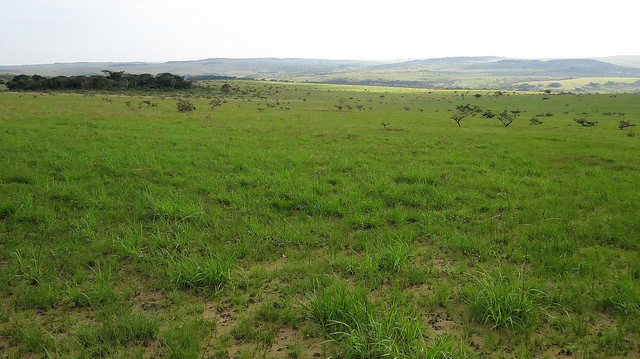
The track is probably not drivable in a normal car and one needs a
4WD. But the site that we visited with the distance from the road to the
savannah and best forest patches could be done walking easily. So one could
take a normal car or taxi to drop you off at the road and pick you up at the
end of the day.
When we visited this site, it seemed that the grasslands had been burned
very recently. Everything was green but short grass and obviously had been
burned not long ago (see picture).
This probably made us missing out on the Francolin. Also
the area did not seem as productive as we hoped for. We are however not sure if
we went to the best site. From descriptions and maps of other reports is seemed
a little off. The (rocky) crater and lake (see picture) seemed to fit but it seemed
that maybe the tarmac road that brought us to the track had cut through the
area making the track much shorter.

The Lekoni Hotel organises 4WD rides in the
area. For the short rides that we needed we thought we did not need a 4WD since
the track from the tarmac road till the point where the driver told us he could
not go further was quite short and could be done by foot.
After two visits we were a little disappointed
with the result as we still missed a couple of typical birds for this area. We
were not sure we were in the right place so we told our driver to try a
different road that might lead us to a different forest patch. He took us to
the 4WD track towards the village of Edjangoulou. He
drove until we were passing through a forest patch and we birded around there
for two mornings. Some of our birds were seen only there: Black-backed Barbet (Ssp macclounii), Black-backed Scimitarbill, Woodland Pipit which were birds we were
hoping for. We dipped the local Weaver. Both of us maybe had glimpses but just
not quite enough to be sure.
To get there it is simply a matter of getting to Franceville
by train or road or air and then public transport over a very good road to Lekoni. The traffic to Lekoni is
very limited and public transport is going when full. So if you have limited
time it is a good idea to ask around at the bus stop. If there are a handful of
people a vehicle will go but it will not be cheap.
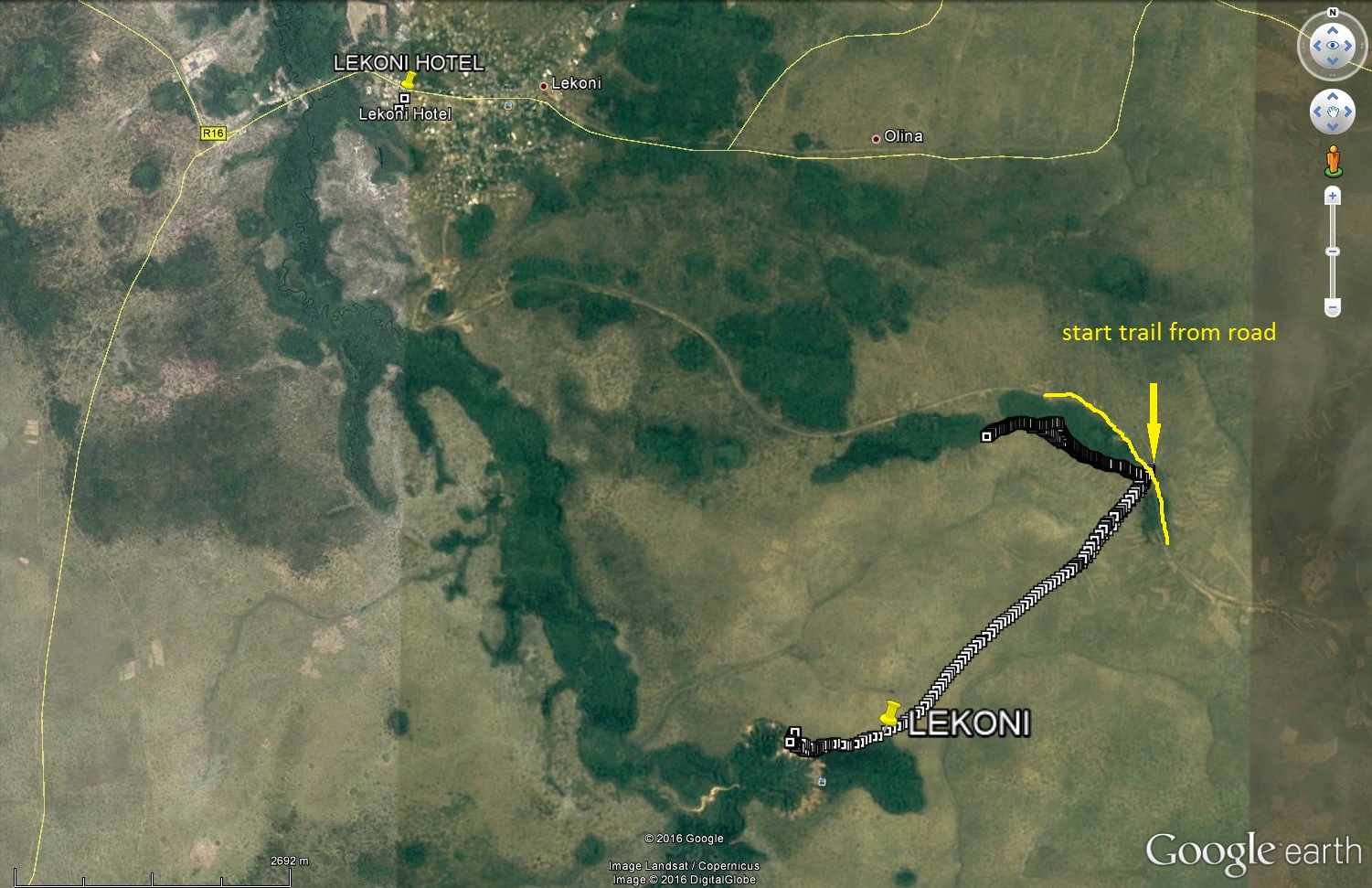 (sat. image march 2011)
Along this road just a few
kilometers from the village where the president Bongo was born (renamed Bongo
village) is the best known site in the world to see the Black-headed
Bee-eater. Nearly half of the birders missed this bird at this site though
and for us without a local guide we thought our only chances to see this bird
were slim. Nevertheless we found the spot to see it so now one does not depend
on tour-companies to see it. We considered ourselves very lucky to spot a bird
while driving 100 km/h through an area that does not strike as typical and it
was actually quite some distance beyond the village of Bongo: GPS:
1°36'37.00"S ; 13°54'42.16"E. There is a clearing on both sides of
the road and coming from Bongoville there is a fairly
large termite mount right on the edge of the left side of the road. We had the
bee-eater on both sides of the road in trees around small ponds that are not
visible from the road. But once even on the wires at the side of the road. If
not seen from the road. Try walking down towards the forest. Coming from Bongo
village towards Lekoni on the left side at the trees
at the very end of the clearing will probably provide you with the best
chances. There were other nice birds around like two species of barbets and
Black Bee-eater.

sat. Image feb 2012)
Birds seen:
Small Buttonquail, African Green-Pigeon, Dideric
Cuckoo, Little Swift, African Palm-Swift, Black Bee-eater, Little Bee-eater, Black-headed
Bee-eater (2), White-fronted Bee-eater, Blue-breasted Bee-eater*, European
Bee-eater, Black Scimitar-bill, Gray-throated Barbet, Bristle-nosed
Barbet, Black-backed Barbet, Black-headed Batis,
Angola Batis, Black-and-white Shrike-flycatcher,
Red-eyed Puffback, Black-crowned Tchagra,
Four-colored Bushshrike, Petit's
Cuckooshrike, Northern Fiscal, Souza's Shrike,
Square-tailed Drongo, Pied Crow, Rufous-naped Lark, Flappet Lark, Banded
Martin, Lesser Striped-Swallow, Rufous-chested Swallow, Black Sawwing, White-winged Black-Tit, Black-collared
Bulbul, Common Bulbul, Red-capped Crombec,
White-chinned Prinia, Salvadori's
Eremomela, Yellow-bellied Hyliota,
Pale Flycatcher, Congo Moorchat, Sooty Chat,
African Thrush, Violet-backed Starling, Superb Sunbird, Woodland Pipit, Short-tailed
Pipit, Yellow-throated Longclaw, Yellow-fronted
Canary, Northern Gray-headed Sparrow, Black-necked Weaver, Vieillot's
Weaver, Village Weaver, Orange-cheeked Waxbill, Peregrine*, Cabanis's
Bunting*, Dambo Cisticola*,
Hartlaub's Marsh Widowbird* (2 non-breeding).
Ipassa
This reserve is part of the Ivindo National
Park. It used to be a park where tourists could start their boat journey to a
camp near the waterfalls deep inside the park. The camp is deserted and seemed
another example of tourism dying in this country. When we were trying to get
to Ipassa. We had a local phoning from the Lekoni Hotel
to Carine. She replied that we could only stay at “the house” (La Maison). This seemed a little confusing to us. We were
hoping this meant we could stay at the station. To our great relief indeed this
is what was meant. Tourists used to go to Ivindo to
get to Langoue Bai, which is the famous spectacular
clearing in the forest where herds of Elephants and Lowland Gorillas among
other mammals could be seen.

We already read on the internet that the Bai is
not reachable anymore unless one is prepared to pay for a very long boat ride
and a long stay. To stay at the station however the price is reasonable by
Gabon standards and it is so close to Makokou that
Carine offered a ride for free. I think it was 70.000 per person per day for
food, lodging, park and guide fees and even several hours boat trips on the Ivindo river. This seemed the cheapest and best value of
all sites inside a national Park to stay. The birdlist
for this place is enormous so we decided to take our time.
Try
to contact Carine before you get there: Carine: +241 04
05 43 12
When we were there the station surprisingly seemed the first and only
place in Gabon where people were active at a natural tourist site regardless of
tourists being there. Some forestry was going on. The station offers a
spectacular view over the river.
The rocks and banks will produce many Rock Pratincole and a few
African Skimmers.
Well before
there is enough light to get good views the Spot-breasted Ibis flies near the
river near this station every morning. This resulted in some of the poorest
just tickable views of a bird I have ever recorded.
Trails seemed to be kept open for research. It is a well maintained place that
seems to have a lot of space for people to stay. We were allowed to have our
own cabins, which were clean with nice beds and they were self-contained. The
food is also good. We settled for dinner and lunch at the station and they
prepared us some food for the early mornings. Our two guides knew nothing about
birds and they did not like to go on all of the smaller trails, telling us
about the danger of Elephants. One is not allowed to enter the forest on his
own because of this danger. The small trails did not seem more productive than
the main wide track going through the forest. We mostly birded the main track.
The forest can be quiet most of the time when not in the early morning until
one encounters a flock or an Army Ant swarm. We found the boat trips surprisingly
unproductive. We were hoping for better views of the Spot-breasted Ibis, Maybe Hartlaubs Duck, African River Martin perhaps a Rosy
Bee-eater etc. Despite the fantastic forest edges on the river which were
sought out many times at close range. We hardly saw any good birds.
 (sat. image Feb
2012)
(sat. image Feb
2012)
birds seen:
Plumed Guineafowl, African
Darter, Spot-breasted Ibis, Hadada Ibis,
African Harrier-Hawk, Palm-nut Vulture, Long-crested Eagle, African Fish-Eagle,
Common Sandpiper, Rock Pratincole, African
Skimmer, African Green-Pigeon, Great Blue Turaco, Yellow-throated Cuckoo,
Klaas's Cuckoo, African Emerald Cuckoo, Gabon Coucal, Bates's Nightjar, Fraser's
Eagle-owl (heard only), Sjosteds Owlet (heard only),
 Little Swift, Narina Trogon*, Bare-cheeked Trogon,
Chocolate-backed Kingfisher, Pygmy Kingfisher, Giant Kingfisher, Black
Bee-eater, White-throated Bee-eater**, Red-headed Lovebird*, White-crested
Hornbill, Red-billed Dwarf Hornbill, African Pied Hornbill, Piping Hornbill,
Black-casqued Hornbill, Yellow-billed Barbet, Yellow-spotted Barbet, Willcocks's
Honeyguide**, Thick-billed Honeyguide, Yellow Tufted Woodpecker*, African
Piculet, Mottled Spinetail*,
Cassin's Spinetail*, Gray Parrot, Chestnut
Wattle-eye, Yellow-bellied Wattle-eye**, Rufous-bellied Helmetshrike,
African Shrike-flycatcher, Western Black-headed Oriole, Black-winged
Oriole, Square-tailed Drongo, Blue-headed
Crested-Flycatcher, Bates's Paradise-Flycatcher,
African Paradise-Flycatcher, Western Nicator,
White-throated Blue Swallow, Lesser Striped-Swallow, Square-tailed Sawwing*, Honeyguide Greenbul, Xavier's
Greenbul*, Icterine Greenbul*, Golden Greenbul*, Spotted
Greenbul, Swamp Greenbul,
Eastern Bearded-Greenbul, Yellow-whiskered Greenbul, Common Bulbul, Chestnut-capped Flycatcher,
African Forest-Flycatcher, White-browed Forest-Flycatcher, Sooty Flycatcher, Olivaceous Flycatcher, Yellow-footed
Flycatcher, Cassin's Flycatcher, Fire-crested Alethe,
Rufous Flycatcher-Thrush, Sooty Boubou*, African Thrush, Johanna's
Sunbird, African Pied Wagtail, Rachel's Malimbe,
Crested Malimbe, Cassin's Malimbe*,
Vieillot's Weaver, Orange-cheeked Waxbill, Common
Waxbill, Black-headed Waxbill, Western Bluebill, Pin-tailed Whydah, Splendid
Glossy Starling.
Little Swift, Narina Trogon*, Bare-cheeked Trogon,
Chocolate-backed Kingfisher, Pygmy Kingfisher, Giant Kingfisher, Black
Bee-eater, White-throated Bee-eater**, Red-headed Lovebird*, White-crested
Hornbill, Red-billed Dwarf Hornbill, African Pied Hornbill, Piping Hornbill,
Black-casqued Hornbill, Yellow-billed Barbet, Yellow-spotted Barbet, Willcocks's
Honeyguide**, Thick-billed Honeyguide, Yellow Tufted Woodpecker*, African
Piculet, Mottled Spinetail*,
Cassin's Spinetail*, Gray Parrot, Chestnut
Wattle-eye, Yellow-bellied Wattle-eye**, Rufous-bellied Helmetshrike,
African Shrike-flycatcher, Western Black-headed Oriole, Black-winged
Oriole, Square-tailed Drongo, Blue-headed
Crested-Flycatcher, Bates's Paradise-Flycatcher,
African Paradise-Flycatcher, Western Nicator,
White-throated Blue Swallow, Lesser Striped-Swallow, Square-tailed Sawwing*, Honeyguide Greenbul, Xavier's
Greenbul*, Icterine Greenbul*, Golden Greenbul*, Spotted
Greenbul, Swamp Greenbul,
Eastern Bearded-Greenbul, Yellow-whiskered Greenbul, Common Bulbul, Chestnut-capped Flycatcher,
African Forest-Flycatcher, White-browed Forest-Flycatcher, Sooty Flycatcher, Olivaceous Flycatcher, Yellow-footed
Flycatcher, Cassin's Flycatcher, Fire-crested Alethe,
Rufous Flycatcher-Thrush, Sooty Boubou*, African Thrush, Johanna's
Sunbird, African Pied Wagtail, Rachel's Malimbe,
Crested Malimbe, Cassin's Malimbe*,
Vieillot's Weaver, Orange-cheeked Waxbill, Common
Waxbill, Black-headed Waxbill, Western Bluebill, Pin-tailed Whydah, Splendid
Glossy Starling.
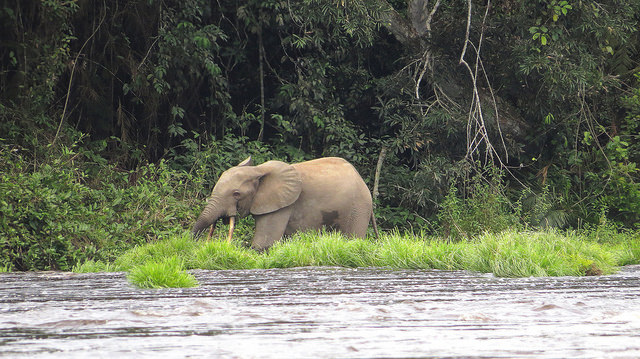
Mammals: Demidoff's Dwarf Galago (1 at pre-dwan close to the river); Forest Elephant (1)
Sao Tome
After a full day travelling by bus from Makokou
to Libreville we stayed at the Tropicana. We spent the next day arranging
flights to Sao Tome and changing money using the internet. I bought some anti-malarials since I forgot to bring half of my pills. We
tried to arrange a boat trip to Akanda NP but failed
to find people that knew where to get the boat to find the good birds. A
Blue-breasted Bee-eater seen from the Hotel was mentionable.
George had sent an e-mail to Antonio our possible guide for Sao Tome.
After checking the internet it seemed that he had replied recently while we were
already in country without access to internet. So this was our contact for Sao
Tome:
Antonio Alberto: +239 993 8315
e-mail: antonioalberto26@hotmail.com
Antonio is not checking e-mail frequently so it is probably best to send
a text message to his mobile. He is a very good guide, knows his birds, never
quits and knows how to improvise. He is good company and knows to arrange
anything you need. We can recommend him. He does not overcharge.
He uses a weird mixture of Latin, french and
English to tell you which species you are listening to:
Gionshanber = Giant Sunbird
Serinus = Principe
Seedeater
Pigeon Vert = Sao Tome Green Pigeon
The two other pigeons are named by their Latin names.
Tchitrec = Sao Tome
Paradise Flycatcher
Lemdove = Lemon Dove
Grand Weaver = Giant Weaver
Petit Sunbird = Newton's Sunbird
In Libreville it took us time to find the only travel agency that we
were able to contact before we were going:
Chica
Voyages: CHICAVOYAGES@YAHOO.FR
We arranged return flights at their office. The flight-time changed
before we left so give them a mobile number to reach you.

With our non-existent skills in the Portuguese language we thought we could try
to contact the local Navetur travel agency to help us
to call Antonio. They fortunately spoke English but it appeared they had their
own guides which they told us were biologists and were hoping we would hire
their guides. We opted for Antonio instead hoping that would be cheaper and at
least he knew the sites and the birds which was all that mattered. Antonio
spoke french, a little Italian but almost no English.
We managed to reach him and he was straight away available even though we
initially asked for his services 2 or 3 days later. He met us within 10 minutes
and we began to plan our itinerary in detail. It seems that Mt. Carmo is the best place to see the difficult birds like the
Fiscal, the Grosbeak, Shorttail and the Ibis. The
weather is usually the problem which makes the birds hard to get. When there is
a lot of rain the Fiscal and the Grosbeak are the biggest problem. According to
Antonio Mt. Carmo is easier to get to than the other
sites and the weather is usually a bit better therefore is the better choice.
Lago Amelia is the better place for the Giant Sunbird and since the weather is
usually much better, offers a chance for the Grosbeak and better chance for the
Scops Owl. The other birds are not the problem. The
Kingfisher is best on the way to Mt. Carmo. We
decided to spend two nights at Lago Amelia then fly to Principe for a short
stay and back to Sao Tome to go to Mt. Carmo for 4
nights.
Because there was time in the mid-afternoon we dumped our gear at a local
cheap hotel of Antonio's choice and used his services with a taxi to try for
the savannah in the north.

The savannah seemed in poor shape and we doubt that at that time it was
the best place to find the typical birds there. Most of it was very recently
burned down by farmers.
Birds seen:
Sao Tome Weaver*, Sao Tome White-eye, Sao Tome Prinia,
Common Waxbill, White-tailed Tropicbird, Bronze Manakin, Cattle Egret, Western Reefheron
(white morph), Yellow Billed (Black) Kite, Common Moorhen, Whimbrel, Calidris spec. (American), Laughing Dove, Little Swift,
African Palmswift, Newton's Sunbird, Yellow
Fronted Canary, Southern Masked Weaver, Golden-backed Bishop, Southern Cordonbleu.
Lago Amelia
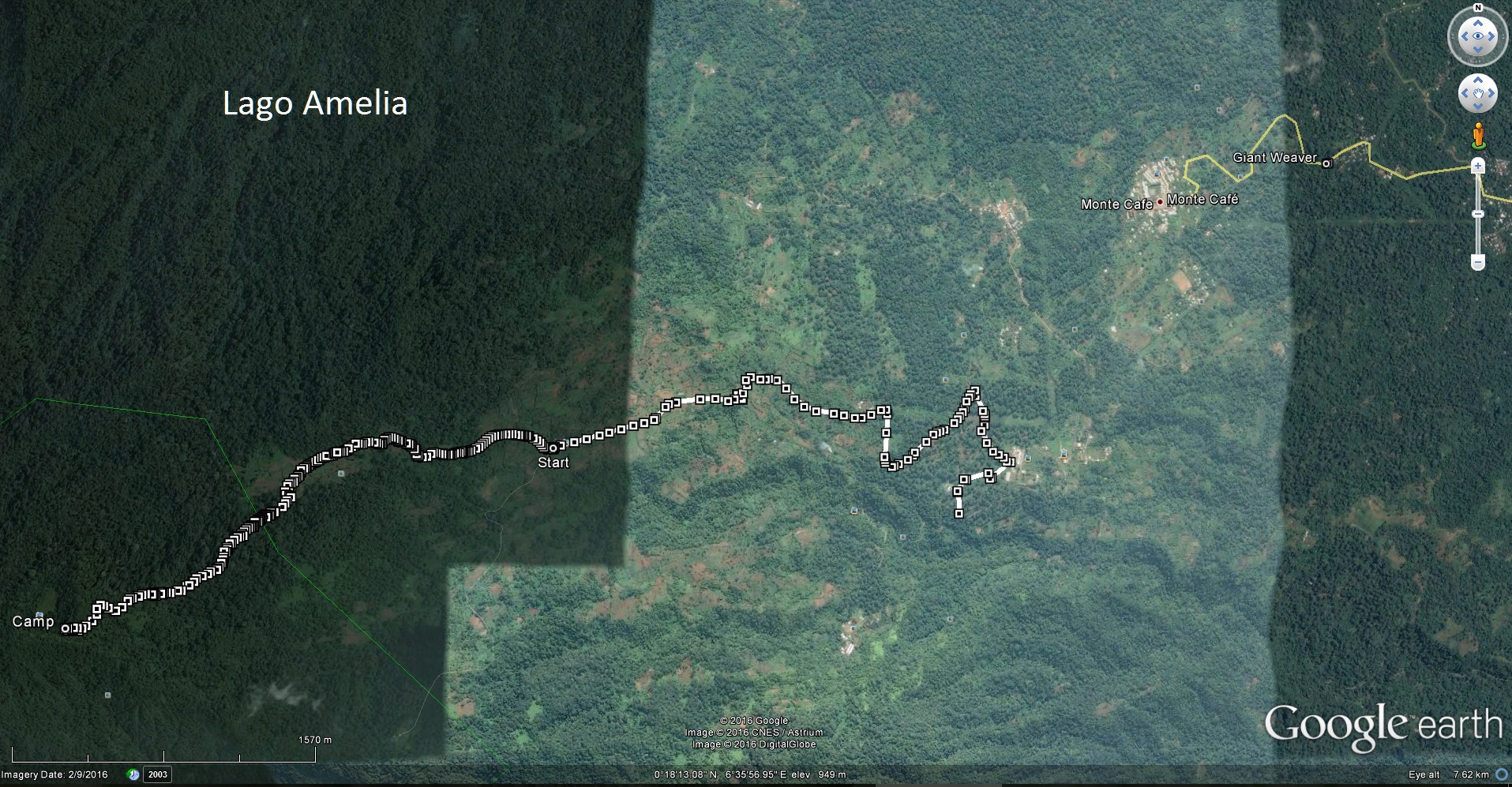
Check the map for a waypoint for the best stretch of road to find the
Giant Weaver. It seemed to like orange flowering trees in this time of the year
and although it can be found on the way down from Lago Amelia we had a lot of trouble
finding two birds until we found a better site along the main road were we saw
a few everywhere there was a tree with orange flowers (September).
Antonio has some personal assistants one of which is a taxi driver. He
drives you up to Bom Sucesso
(according to Google Earth) which is marked on this map as “start”. From there
it is climbing by foot for a few hours until you get to a kind of viewpoint
which is the camp ground. It is quite close to a radio tower that when we were
there annoyingly has a loudspeaker calling out every babbling on a radio that
seemed to be used to socialise. Luckily it quieted down when we went for the Scops Owl that came right up to the camp-ground and showed
very well.
If the weather is fine you would probably have seen most common birds by
the time you get to the camp. From there one has chances for the Grosbeak and
the Scops Owl and the Giant Sunbird seems fairly
common around the camp too.
The Sao Tome bronze-naped Pigeon was only seen
once much further down in the plantations closer to where Antonio lives.
Birds seen:
Black Kite, Maroon (Sao Tome Olive) Pigeon, Sao Tome (Bronze naped) Pigeon, Forest (Lemon) Dove, Sao Tome Green-Pigeon,
Sao Tome Scops-Owl, Sao Tome Spinetail,
Little Swift, African Palm-Swift, Sao Tome Oriole, Sao Tome Paradise-Flycatcher,
Sao Tome Prinia, Black-capped Speirops,
Sao Tome White-eye, Sao Tome Thrush, Chestnut-winged Starling, Newton's
Sunbird, Sao Tome (Giant) Sunbird, Principe Seedeater, Sao Tome Grosbeak, Southern
Masked-Weaver, Giant Weaver, Sao Tome Weaver, Common Waxbill.
Mt. Carmo
Needless to say that you will need a guide to get there. The way we went
up this part of the mountain that is named after a strange very steep enormous
rock that is striking feature in the landscape.
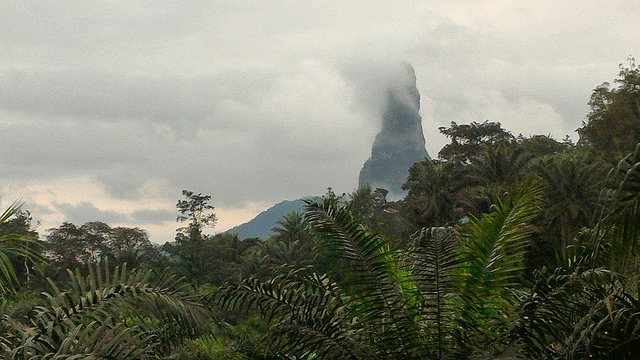
Antonio's taxi brought us up to the heavily guarded gate of the palm
plantation (palm-oil). At first it seemed as we had a serious problem as they
would not let us through. Antonio spoke to the guards and then took out his
mobile to call. He said to us: "No problem, two minutes". After few minutes the guards let us
through. We drove for a few kilometres through the plantation. Then we reached
a river. The taxi was able to drive through the river. But right after crossing
it stopped. We had to go on by foot on a muddy trail. After only 100 m we already
had to cross a stream that was too deep to keep boots on but just shallow
enough to use rubber boots. Antonio carried me across several streams after
this of which one was too deep even for rubber boots. After 2.5 km or so we
reached the end of the plantation and a not very obvious entrance to the thick
forest.
Right after the entrance of the forest we noticed a fairly large concrete old
building that was collapsed but still had a few edges to shelter and then it
started raining heavily. We decided to camp under the edges of the building
instead of the actual camp further inside the forest.
It hardly ever stopped raining after that. The birding was very tough here.
We used the one moment when the rain eased down to
track up to the site for the Fiscal and scored! The Grosbeak is usually closer
to camp. Our base camp was decided to be the concrete building because of the
rain (Campmc on the map). If you are more lucky with
the weather you might go up to the actual camp inside the forest closer to the best
sites for all birds (Camp on the map).
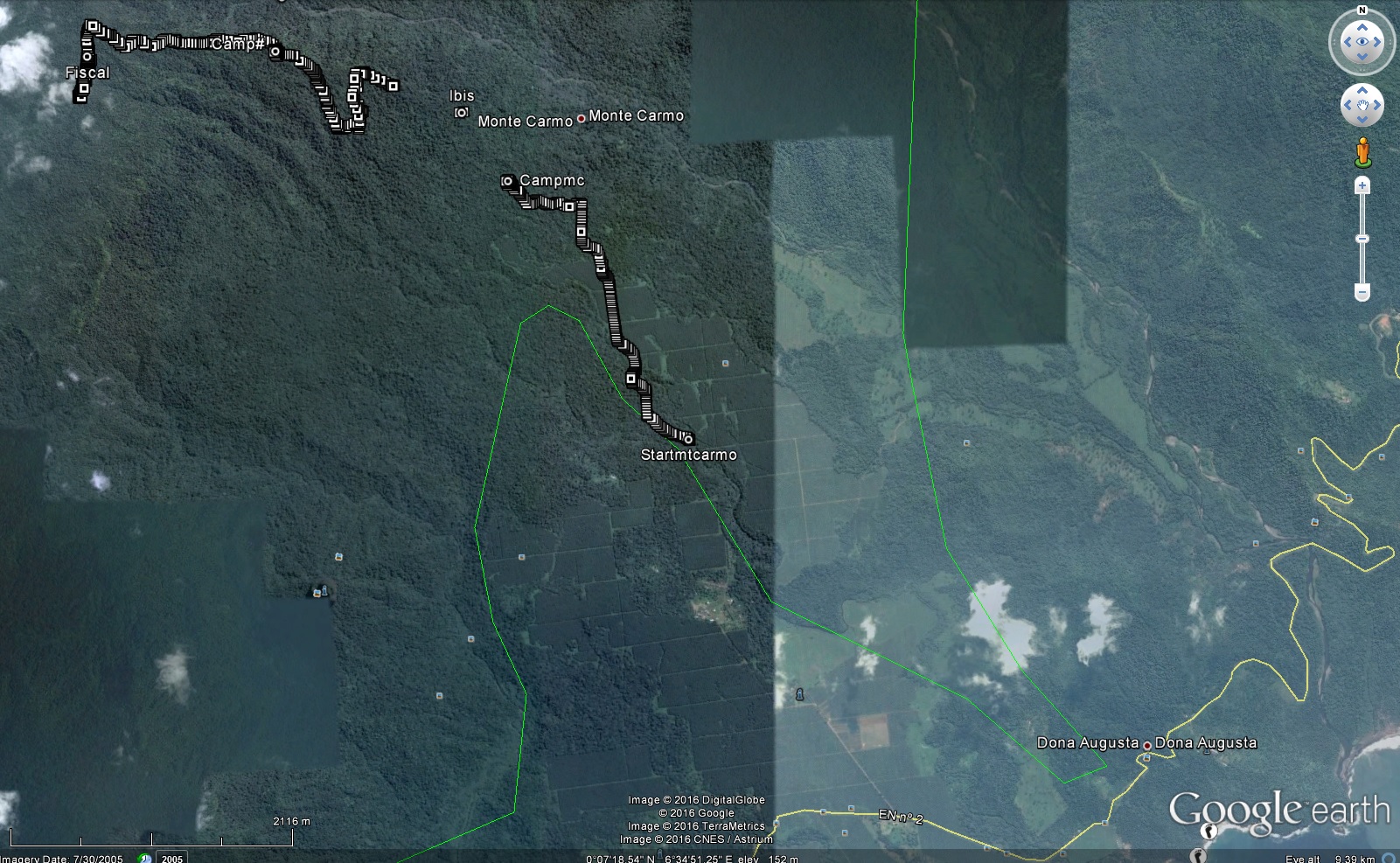
(image january 2009)
Birds seen:
Sao Tome (Olive) Ibis, Black Kite, Whimbrel, Sao Tome
Pigeon, Forest (Lemon) Dove, Sao Tome Scops-Owl,
Sao Tome Spinetail, Newton's Fiscal, Sao Tome
Oriole, Sao Tome Paradise-Flycatcher, Sao Tome Prinia,
Black-capped Speirops, Sao Tome White-eye, Sao Tome
Thrush, Chestnut-winged Starling, Newton's Sunbird, Sao Tome Sunbird, Sao
Tome Short-tail, Principe Seedeater, Sao Tome Grosbeak, Giant
Weaver, Sao Tome Weaver,
Driving back from Mt. Carmo we stopped at a
river crossing to see:
Sao Tome (Malachite) Kingfisher, White-tailed
Tropicbird, Long-tailed Cormorant, Striated Heron
Principe
At Principe it is just a matter of walking around to see the endemics.
We found two tracks worth going. The track just after crossing the river to the
village Bela Vista and the tracks branching of the tarmac road from the airport
to town (Santo Antonio) towards the village Joachim.

We stayed at a cheap grotty and not very clean place in town, just after
the bridge over river. (first pink house on the right after crossing
the bridge). Nothing like the luxury that most birders enjoy. For the birds one
does not need to go to the Bom bom
resort. We birded the track to Bela vista just on the east side of the river
(follow track along river see map). It is signposted right after the bridge
coming from the direction of the airport and town.
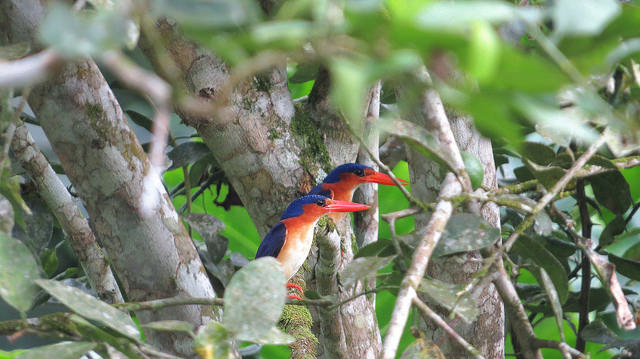 Sat. Images 2008
We had some difficulty
finding the Principe Glossy Starling as most birds we encountered were Splendid
Glossies. But found several on the road towards Joachim (see map). This is also
were we had our Sao Tome Bronze naped Pigeon. Surprisingly
the Velvet Mantled Drongo (which will probably not be
split in the near future) seemed one of the least common birds. We only saw it
along the tarmac road at the hairpin bends going up the hill towards
the airport from town. The forest along the road to
Joachim looks good and probably is the best place to see the usual endemics.
For the White-eye and Thrush one need to go on an organised track or spend at
least 3 days. The weather was not good even at sea-level and we had little
time so we did not go for them.
Birds seen:
White-tailed Tropicbird, Western Reef-Heron, Cattle Egret, Striated
Heron, Black Kite, Common Ringed Plover, Common Sandpiper, Whimbrel, Sao Tome
Bronze naped Pigeon, Lemon Dove, Laughing Dove,
African Green-Pigeon, Sao Tome Spinetail, Little
Swift, African Palm-Swift, Principe (Malachite/White-bellied) Kingfisher,
Blue-breasted Kingfisher, Gray Parrot, Velvet-mantled Drongo,
Dohrn's Thrush-Babbler, Principe Speirops, Splendid Glossy-Starling, Principe Glossy-Starling,
Principe Sunbird, Western Olive Sunbird, Principe Golden-Weaver, Common
Waxbill, Bronze Manakin
At the airport just before flying back to Sao Tome we had to our
surprise:
Principe Seedeater
